

COMMUNIQUÉ ISSUED BY THE
GHANA CATHOLIC BISHOPS’ CONFERENCE
AT THE END OF ITS ANNUAL PLENARY ASSEMBLY
HELD IN JAMASI IN THE ASHANTI REGION OF GHANA
NOVEMBER 3-14, 2026
1. GREETINGS
Brothers and Sisters in Christ,
“May the grace of our Lord Jesus Christ, the love of God and the communion of the Holy Spirit be with you all” (2 Cor. 13:13, NRSV).
2. PREAMBLE
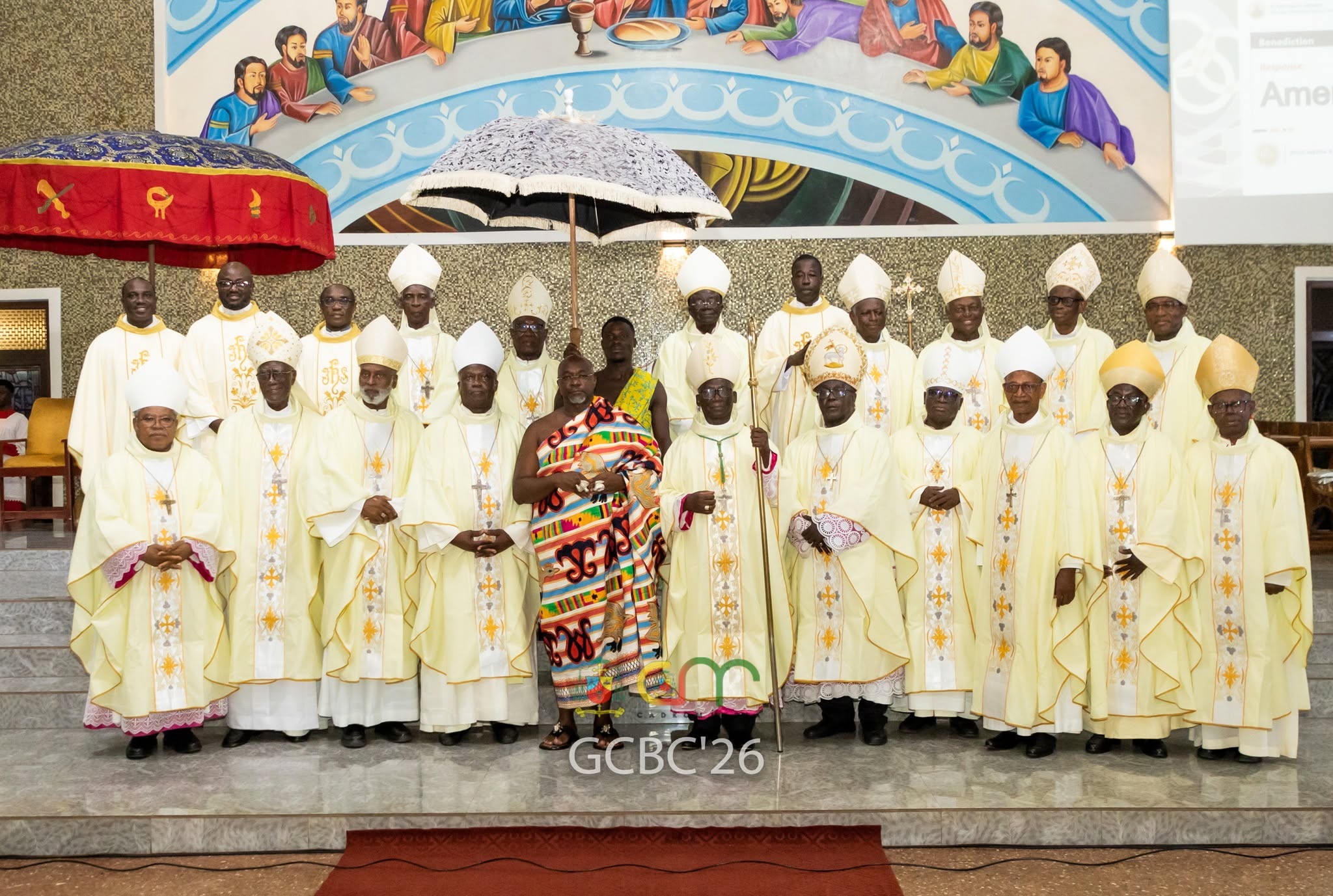
2.1 We, the members of the Ghana Catholic Bishops’ Conference, have held our annual Plenary Assembly at the Divine Providence Pastoral Centre, Jamasi, in the Konongo-Mampong Diocese in the Ashanti Region of Ghana from November 3 to 14, 2026, under the theme: “Communion, Participation and Mission: Preparing the Catholic Church in Ghana for Her 150th Anniversary in 2030”.
3. ACKNOWLEDGEMENTS AND GRATITUDE
3.1 At the start of our Plenary Assembly, we held a four-day spiritual retreat led by Br. Bertrand Nee Wayoe, C.S.C., to whom we owe a debt of gratitude for his rich input.
3.2 In the course of our Plenary Assembly, we visited and interacted with the paramount chiefs and Queens of Mampong, Juaben, Kumawu, Agona and Ejisu and the Bonwire Kente Museum. We wish to render our sincerest thanks to Daasebre Otuo Siriboe II, Paramount Chief of Juaben, for his warm hospitality. We also celebrated Holy Masses and interacted with the People of God in many parishes and institutions of the diocese.
3.3 We interacted with the Country Representative of Catholic Relief Services (CRS), Abena Amedormey, the CEO of the National Blood Service, Dr. Shirley Phyllis Ohenewaa Owusu-Ofori, and Dr. Kwabena Owusu-Agyemang, a Computer Scientist.
3.4 Our Plenary was also graced by the presence of the Apostolic Nuncio to Ghana, His Excellency, Most Rev. Julien Kaboré, the Mamponmanhene, Daasebre Osei Bonsu III, the MCE for Kwabre East Municipality and the representative of the Ashanti Regional Minister, Hon. Joseph Amankwah, the MP of Kwabre East Constituency, Hon. Akwasi Gyamfi OnyinaAcheampong and Sir Fosuaba Mensah Banahene, who was the Chairman of the opening ceremony.
3.5 We wish to express our gratitude to Most Rev. John Opoku-Agyemang, the Priests, Consecrated Persons and the Lay Faithful of the Konongo-Mampong Diocese for their warm hospitality and selfless contribution towards the success of our Plenary Assembly.
4. DISABILITY INCLUSION AND ACCESSIBILITY
4.1 We commend the Diocese of Konongo-Mampong for its disability-friendly infrastructure and urge Church and State authorities to ensure that public and ecclesial facilities are accessible, promoting the dignity, inclusion and full participation of persons with disabilities.
5. WEST AFRICA YOUTH DAYS, SEPTEMBER 7-11, 2026
5.1 We express gratitude to the Government of Ghana, the Catholic faithful, with particular mention of the Ghana National Catholic Youth Council (GHANCYC), volunteers, benefactors and all stakeholders for the successful organisation of the maiden West Africa Youth Days held at the Achimota School in Accra. About 4,000 Catholic Youth from 13 countries of the sub-region participated in this event. We fervently hope our youth will feel encouraged to live out their faith courageously and contribute enthusiastically to the mission of the Church.
6. TRADITIONAL LEADERSHIP AND PEACEFUL SUCCESSION
6.1 We congratulate the newly enstooled Paramount Chiefs of Mampong and Agona and wish them successful reign. We also commend the people of the Dagbon Traditional Area for their peaceful conduct following the demise of their king, and urge all traditional leaders to uphold peace, unity and sustainable community development.
7. THEME FOR THE PLENARY
7.1 Our theme for this plenary has been informed by the call to live as a synodal church, where no one is left behind. Synodality is characterized by the three pillars of communion, participation and mission. In union with the universal church, we find ourselves at the implementation phase of this journeying together as the Body of Christ. In the light of this, the National Synodal Team has developed implementation guidelines addressing the priority areas identified in the Final Document of the Synod on Synodality (2024), with particular reference to the pastoral and ecclesial context of the Church in Ghana. These guidelines are intended to provide coherence, direction and practical orientation to the implementation process across our dioceses, parishes, rectorates, outstations and institutions.
7.2 Communion expresses the very nature of the Church. It is first of all a gift of God, rooted in the life of the Blessed Trinity. Through baptism, we are incorporated into Christ and become members of one Body, despite the diversity of our origins, cultures, languages and responsibilities.
7.3 Our communion finds its deepest expression in the Eucharist, is nourished by the Word of God and is sustained through our visible unity with the Successor of Peter and the College of Bishops. It is this communion that enables the Church, with her rich cultural diversity, to manifest the unity for which Christ prayed: that all may be one.
7.4 Communion must find concrete expression in the lived experience of our ecclesial communities: in our dioceses, parishes, outstations, chaplaincies, religious institutes and Christian families. It must be discernible in our capacity to listen to one another, accommodate legitimate differences, reconcile fractured relationships and extend genuine fraternal charity to every member of the Body of Christ.
7.5 Participation flows naturally from communion. It is the sharing of human beings, by grace, in the life, being, mission and activity of God. Participation is a fundamental theological principle rooted in the conviction that human beings are created in God's image and likeness, redeemed through Christ, and called to share in the divine life. It is not simply a matter of ecclesiastical organization or administrative convenience. It is a requirement flowing from baptism itself. Every baptized person has received a dignity, a vocation and a responsibility within the Church.
7.6 Consequently, the voices and contributions of our youth, women and men, catechists, teachers, healthcare professionals, farmers, traders, workers, persons with disabilities and those on the margins of society must be recognised, valued and meaningfully integrated into the life and pastoral discernment of our ecclesial communities. This is an invitation to us to examine how we involve our priests, consecrated persons and lay faithful, especially catechists, women, young people in the life of our local Churches.
7.7 Mission is the act of sending, a dispatching and refers to our organized effort – individually and as church - for the spread of the Gospel of our Divine Master, Jesus Christ (Cf Matthew 28:18ff). Communion and participation find their ultimate fulfilment in mission. The Church does not exist for herself; she exists to proclaim Christ and to make present the saving love of God in the world. Mission is not simply one pastoral activity among several. It constitutes the very reason for the Church's existence.
7.8 For the Catholic Church in Ghana, this missionary vocation must find expression in every sphere of human existence: our homes, schools, universities, workplaces, hospitals, markets, public institutions and digital spaces. We are called not only to proclaim the Gospel through our words, but also to embody its transforming power through our witness to human dignity, the promotion of justice and peace, solidarity with the poor and vulnerable, the protection of creation and the formation of consciences.
7.9 Our missionary responsibility also demands a renewed commitment to Catholic education and healthcare, the formation of responsible citizens and the advancement of the common good. In a society confronted by significant moral, economic and social challenges, the Church must continue to be a credible voice of truth, a courageous advocate for justice and a visible instrument of reconciliation and hope.
8. ARTIFICIAL INTELLIGENCE AND THE CHURCH’S MISSION
8.1 The technological advancements of our time require us to reimagine our strategies and tools for mission. Recognising the transformative influence of Artificial Intelligence (AI), we acknowledge its immense opportunities for human development as well as its potential threats to human dignity, truth, privacy and social cohesion.
8.2 Drawing inspiration from Pope Leo XIV’s encyclical Magnifica Humanitas - Magnificent
(2026) on safeguarding the human person in the age of artificial intelligence, we affirm
that technological advancement must remain at the service of the human person and the common good. AI must never diminish human agency, moral responsibility or the inherent dignity of the person.
8.3 As the Church in Ghana, we commit ourselves to developing a coherent pastoral and institutional response through education, research, ethical reflection and appropriate formation of clergy, religious and lay faithful. We urge all to guard against misinformation, disinformation and the deliberate manipulation of digital platforms. We shall also accord due priority to the protection of personal data and the ethical integration of artificial intelligence into evangelisation, education and pastoral ministry.
8.4 We must engage technological developments with discernment and wisdom, ensuring that technology serves humanity rather than the other way round.
9. 150 YEARS OF THE CATHOLIC CHURCH IN GHANA (1880-2030)
9.1 We are four years away from our 150th anniversary celebration as the Catholic Church in our beloved country. This ought to be an occasion of profound thanksgiving to God for the extraordinary journey of faith that began in 1880 and has since taken root across our nation. We owe an immeasurable debt of gratitude to the missionaries, catechists, indigenous clergy, consecrated men and women, lay faithful and countless witnesses whose sacrifices, perseverance and fidelity laid the foundations upon which the Church in Ghana continues to flourish.
9.2 The significance of this anniversary must transcend memorial celebrations, historical exhibitions, processions, commemorative publications and festivities. It falls to us to ensure that the faith we have so gratuitously received continues to bear abundant fruit in our generation and among generations yet unborn. The anniversary must, therefore, become an occasion of ecclesial conversion and missionary renewal.
9.3 We must be inspired to build ecclesial communities that are more united in faith and charity; that create meaningful opportunities for all the baptised to participate in the life and mission of the Church; where our pastoral structures are sufficiently responsive to the signs of the times and where we show ourselves as credible witnesses to the Gospel and are more effective instruments of evangelisation and social transformation.
9.4 To be observed under the theme “150 Years of Catholic Evangelisation in Ghana (18802030): A Journey of Faith, Mission and Hope”, our preparations towards the climax will include the dedication of the coming years to the Persons of the Most Holy Trinity.
2027: Year of Jesus Christ, The Son of God 2028: Year of the Holy Spirit 2029 – Year of God the Father.
2030 will witness the climax of our celebrations. The date for the official launch will, however, be communicated in due course.
10. OTHER ANNIVERSARIES
10.1 Golden Jubilee of Diplomatic Relations between Ghana and the Holy See and Ghana’s
Seventieth Independence Anniversary
10.1.1 We congratulate the Republic of Ghana and the Holy See on the fiftieth anniversary of the establishment of diplomatic relations, 1976 to 2026. We celebrate five decades of cordial relations, mutual respect and constructive engagement in promoting human dignity, peace, education, healthcare and integral human development.
10.1.2 We look forward to commemorating this milestone alongside Ghana’s Seventieth Anniversary of Independence in 2027. We pray that these celebrations will strengthen Church and State relations towards our common commitment to integral development and peace.
10.1.3 As a nation, may we continue to mature in democratic governance, responsible leadership and respect for the dignity and rights of every citizen.
10.2 Golden Jubilee of the National Union of Ghana Catholic Diocesan Priests’ Associations
10.2.1 We warmly congratulate the National Union of Ghana Catholic Diocesan Priests’ Associations (NUGCDPA) on attaining fifty years (1976-2026) of existence. We acknowledge with gratitude the generations of priests whose fraternity, commitment and service have sustained the Union over the past five decades.
10.2.2 As a Conference and as individual Bishops, we wish to register our profound thanks to our priests for their pastoral collaboration with us in shepherding the flock of Christ entrusted to our care. We sincerely appreciate them.
10.2.3 This Golden Jubilee is an opportunity to renew our priestly fraternity, mutual support, spiritual growth and commitment to the mission of the Church. We pray that the Union will continue to foster priestly holiness, communion and service in a synodal and missionary Church.
11.0 SOME NATIONAL ISSUES OF CONCERN
11.1 Integral Ecology and Environmental Protection
11.1.1 We remain deeply concerned about the devastation caused by illegal and irresponsible mining (galamsey), particularly the pollution of water bodies, destruction of forest reserves, degradation of agricultural lands and threats to public health.
11.1.2 In the spirit of integral ecology, we reaffirm that care for our common home is inseparable from human dignity, social justice and the wellbeing of future generations. We therefore call upon His Excellency the President, as the father of the Republic, to demonstrate courage and determination in saving the environment, and to show greater leadership in the fight against galamsey.
11.1.3 Considering that the interventions put in place by the government of President Mahama are so far not producing the desired, promised and expected end of the menace of galamsey, we believe that it is NOW time to declare a targeted state of emergency in the locations most affected by illegal and irresponsible mining to allow for a national development and implementation of regulations which will ensure responsible and environmentally friendly mining. Regulatory institutions, security agencies, traditional authorities, religious leaders and all citizens must join forces and resources to defeat this common enemy. The fight against galamsey must confront networks of complicity, ensure accountability, provide sustainable livelihood alternatives and promote community participation in environmental protection.
11.2 Drug Trafficking and Substance Abuse
11.2.1 The alarming rates of drug trafficking and substance abuse, posing a threat to public health, family stability, youth development and national security, cause us great distress. We call upon the relevant institutions to intensify intelligence-led enforcement including legitimate punishment, border controls, public education and rehabilitation services. Families, schools and religious institutions must equally strengthen preventive education and support for persons affected by substance dependency.
11.3 Indiscipline in Educational Institutions and the need for Safeguarding of Minors
11.3.1 Of immense concern too is the growing indiscipline in some educational institutions, including even some of our own mission schools. There are reports of violence, disrespect for authority, examination malpractices and vandalism. Above all it is heart-breaking to note allegations of the sexual abuse of some of our minors in schools by some adults under whose care they have been placed. These practices undermine the formative purpose of education and the moral foundations of society.
11.3.2 We call upon the Ministry of Education, the Ghana Education Service, school authorities and the relevant departments of the Police to investigate these allegations dispassionately and let the law take its course and to strengthen discipline, character formation and moral education. We particularly encourage a renewed Government-Missions partnership in the management of mission schools, founded on mutual respect, clearly defined responsibilities and fidelity to their founding ethos. Education must produce not merely academically competent individuals but responsible and morally grounded citizens.
11.4 The Human Sexual Rights and Family Values Bill
11.4.1 We note Parliament’s decision to rescind its earlier passage of the Human Sexual Rights and Family Values Bill. We encourage Parliament and the relevant constitutional institutions to approach any further consideration of the matter with the requisite speed, constitutional fidelity, legislative diligence and due regard for its moral, social, cultural and human rights implications.
11.4.2 We reiterate the Church’s commitment to the sanctity of human life, the dignity of every person, the authentic understanding of marriage, family and human sexuality.
11.5 Conflicts in Ghana
11.5.1 We are deeply disturbed by the persistence of conflicts and communal tensions in various parts of the country, particularly those in Bawku and Kalba-Gbinyiri. These conflicts have exacted a devastating toll on human life, community cohesion, livelihoods and national security, while undermining the prospects for peace and development.
11.5.2 While acknowledging the recent reduction in violence in these areas, we urge all parties to exercise restraint, renounce violence and embrace dialogue, reconciliation and peaceful coexistence. We particularly call for the full and faithful implementation of the recommendations contained in the relevant report on the Kalba-Gbinyiri conflict, without selective application or undue delay. Lasting peace requires justice, mutual recognition, confidence-building and the protection of all affected communities.
12. CONCLUSION
12.1 As we journey towards 2030, the 150th anniversary of the Catholic Church in Ghana, we reaffirm our commitment to being a credible witness to the Gospel, a steadfast advocate for justice and peace, and a committed partner in the integral development of our nation.
12.2 We call upon Government, public institutions, religious leaders, traditional authorities, civil society organisations and all people of goodwill to exercise responsible leadership in addressing the challenges confronting our country.
12.3 We entrust our Church and nation to the maternal intercession of the Blessed Virgin Mary, Mother of the Church and Star of Evangelisation. May the Lord grant Ghana peace, unity and prosperity, and guide the Catholic Church in Ghana towards a renewed and fruitful missionary future.
May St. Paul the Apostle and St. Gabriel the Archangel, Patron Saints of the Konongo-Mampong Diocese, continue to intercede for us. Amen.
Issued on Friday, November 13, 2026,
in the St. Paul Cathedral in the Konongo-Mampong Diocese.


